
|
| Home :: Herbalist :: Orchardist :: Family :: Farm |
|
 |
|
|
Grower Network Research | |
All apple growers are invited to join in this community effort by sharing innovative research and bouncing around unconventional ideas. Comparison trials amongst growers targeting similar apple varieties on soil-focused orchard sites will prove very insightful to us all. Holistic Orchard Research |
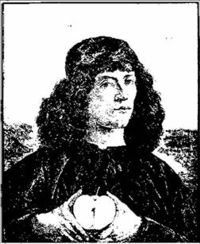 Adapted illustration by John Bunker, | |
| "If a grower knows why, he or she will teach themselves how." L. H. Bailey, The Principles of Fruit Growing, 1897, 1926 | ||
Thoughts on Grassroots ResearchUseful research for holistic orchardists will always depend on the integration of several factors. Tree health counts, air drainage counts, birds count, microbes count, beneficial insects count, and when it comes to inputs, synergy counts. The organic context is best seen as a holistic integration of everything we do. Nor will an organic solution necessarily seem worthy if we insist on the same standards of "chemical perfection". The mythical 95% packout ties into a cheap food system that requires large-scale growers, mega-packing houses, and WalGreed super stores to set out the syrupy and insipid results of the harvest. A sensible local economy that provides locally-grown food is one of the factors integral to the methods we seek to develop. We always need to think "integration" in our research approaches even though combined effects are much harder to discern! Ideas abound when we start considering insect balance, timing of sprays, synergy, holistic disease management approaches like compost tea, and especially living soil systems. Bioregional groups have the best opportunity to "loosely coordinate" the cutting edge ideas of its participating growers. Communicating through the Community Orchardist newsletter and these research pages is one way we can share solid results. | ||
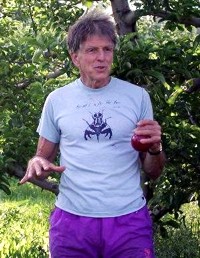 |
Holistic ConsciousnessLearning to "project your consciousness" into the mind of an insect (or a scab spore or a feeder root tip for that matter) is a powerful way to understand the interconnectedness of Nature. The late Ron Prokopy of the University of Massachusetts did this time and time again in developing numerous strategies to deter orchard pests over the course of his lifetime. Any and all apple growers need to hone their observation skills and then literally listen to the teachings that the orchard willingly shares. Ron's influence will live on for a long time to come in each of us who seeks to understand deeply. Photo courtesy of Tracey Leskey
|

|
Comparing Apples to OrangesTwo tools in particular intrigue me for "putting numbers" on our methods from which we can begin to draw conclusions. have great relevance as to soil methods, observable pest resistance, and fruit nutritional content. Ergo, we all need to invest in refractometers! Soil life testing produces a biological profile of individual orchard soils that says way more than any nutrient-based soil test reveals. Bioassays are more costly but if we really want to explore which living soils approaches have the greatest health merit, we, the growers, need to do this. Both (living soils) and (composts and compost teas) are reputable labs that offer vital knowledge. Particular NotionsEvery fruit grower has an intuitive understanding of what needs to be better understood. The parameters for establishing a grower-managed trial are outlined in the revised Apple Grower (see page 58). Here we list just a few holistic possibilities to get the ol' noggin turning:
Ideally, we can connect with other growers in our bioregion to trial such ideas. Just as every sustainable orchard site has its quirks, so does every growing season. Methods are repudiated for long-term impact all the more when different growers observe similar results. Learning to have the discipline to follow through on ideas begun in spring makes all the difference! Be inspired and keep in touch. Holistic Orchard Research
|
|
| Home :: Herbs :: Apples :: Contact Us :: Top |
|
recommend this page to a friend |
|
|
send website feedback to the Heartsong Farm webster website by last updated 8 November 2006 :: 9:40 am (Pacific) time this site generated with 100% recycled electrons! | |
website design and images copyright ©
website content copyright © Heartsong Farm all rights reserved, thank you | |
